

Aluminum chloride for sweaty feet

Aluminum chloride for sweaty feet helps reduce heavy sweating on the feet. You often notice the difference fastest when your socks and shoes usually get damp quickly.
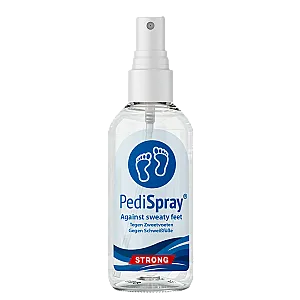
In practice, the choice often comes down to PediSpray Regular (15%) or PediSpray Strong (20%). The right strength depends on how much your feet sweat, how your skin responds and what feels comfortable to keep using.
In short
- PediSpray Regular: 15% aluminum chloride.
- PediSpray Strong: 20% aluminum chloride.
- Choice: base it on how your skin responds and what feels realistic for daily use.
By
Judith de Jong, Content owner, PediFris®
Medically reviewed by Sébastian Deqidt, podiatrist
· Updated on 24 June 2026
The same active ingredient as the pharmacy solution, but ready to use and gentle on the skin: a fragrance-free foot spray that reduces sweating. Strong (20%) for persistent sweating, Regular (15%) to start with.
Recommended for sweaty feet: PediSpray® antiperspirant with aluminium chloride — Regular 15% or Strong 20%


Aluminium chloride for sweaty feet
How to use aluminium chloride for sweaty feet
Aluminium chloride is the active ingredient for treating sweaty feet: it inhibits sweat secretion on the skin. The pure pharmacy solution (15% or 20%) is effective but can cause irritation, stain clothing, and is flammable. PediSpray® contains the same aluminium salts in a ready-to-use, fragrance-free spray — easy to apply.

Step 1
Choose your concentration: 15% or 20%
Start with PediSpray® Regular (15% aluminium chloride) if you have sensitive skin. If you sweat a lot or don’t notice much of a difference, choose Strong (20%). A higher concentration isn’t automatically better — it’s about finding the right balance between effectiveness and how comfortable your skin feels.
Step 2
Apply to clean, dry feet
Apply the spray to clean, completely dry feet — preferably in the evening. Allow it to dry thoroughly before putting on socks, so that the aluminium chloride can take effect on the skin.
Step 3
Build up gradually and keep the shoe dry
Use it daily for the first few days, then once or twice a week. If you notice any redness or a burning sensation, use it less frequently. Sprinkle PediFris® Classic powder into your shoes to keep them dry and fresh.
.svg)
 Linda Heeren
★
★
★
★
★
03 Jul. 2026
"The only product that really works. "
Translated
Rolf
★
★
★
★
★
03 Jul. 2026
"Can’t say much about it yet… I’ve only had it for a week. Initial indications are that it’s effectiv..."
Translated
 Dirk Wendland
★
★
★
★
★
01 Jul. 2026
"Everything’s great – would definitely buy again – very good and effective products – fast delivery"
Translated
Richard F
★
★
★
★
★
22 Jun. 2026
"Despite my initial scepticism, I must admit that my feet no longer sweat. I wonder if it will stay t..."
Translated
Anna Schenk
★
★
★
★
★
12 Jun. 2026
"Haven’t received the order yet. After contacting customer services, the order was reshipped and has..."
Translated
T.J.
★
★
★
★
★
08 Jun. 2026
"Good and fast delivery, good product."
Translated
Dieter Röhrich
★
★
★
★
★
08 Jun. 2026
"Super-fast delivery 💯👍"
Translated
Patrick
★
★
★
★
☆
08 Jun. 2026
"So far, there"
Translated
Neri Peters
★
★
★
★
★
05 Jun. 2026
"Received excellent service; a great product – highly recommended."
Translated
NW
★
★
★
☆
☆
02 Jun. 2026
"For me, as someone who suffers from excessive sweating of the hands and feet, it unfortunately doesn..."
Translated
What does aluminum chloride do for sweaty feet?
Aluminum chloride helps reduce sweat on the skin for a while. That often means feet feel less clammy and moisture builds up more slowly in socks and shoes.
That is useful if your problem is not just odour, but also feet that quickly get wet inside closed shoes. Less moisture on the skin usually feels better and makes the routine easier to stick to.
In practice, you usually choose between 15% aluminum chloride and 20% aluminum chloride. With PediSpray, that means PediSpray Regular = 15% and PediSpray Strong = 20%.
A higher strength is not automatically better. The main question is what your skin handles well and what you can keep using comfortably.
15% or 20%: which one suits you better?
Start with the strength your skin handles well.
Regular (15%) is a sensible starting point for many people. If you notice too little difference, you can move on to Strong (20%) later.
Aluminum chloride on the skin: how to use it in practice
Use aluminum chloride on clean, completely dry feet. Apply it mainly to the sole of the foot and the areas where you sweat the most. A thin, even layer usually feels better than using too much at once.
Let the product dry properly before putting on socks. That helps it stay on the skin instead of ending up in the fabric. Do not use it on open cuts, damaged skin or clearly irritated areas.
Build up slowly. If you notice redness, tightness or a burning feeling, use it less often or step down from 20% to 15%. That slower build-up often makes the routine much easier to keep going.
Always combine this skin routine with clean socks, well-ventilated shoes and a steady care routine. That is what makes less sweat on the skin really matter day to day.
May also help in pitted keratolysis
Less moisture on the skin gives bacteria less room.
Sweating less can help keep the skin drier. That may be useful when bacteria are part of the problem.
Not sure whether 15% or 20% suits you best? Compare PediSpray Regular and Strong side by side and choose the strength that best fits your skin and your routine.
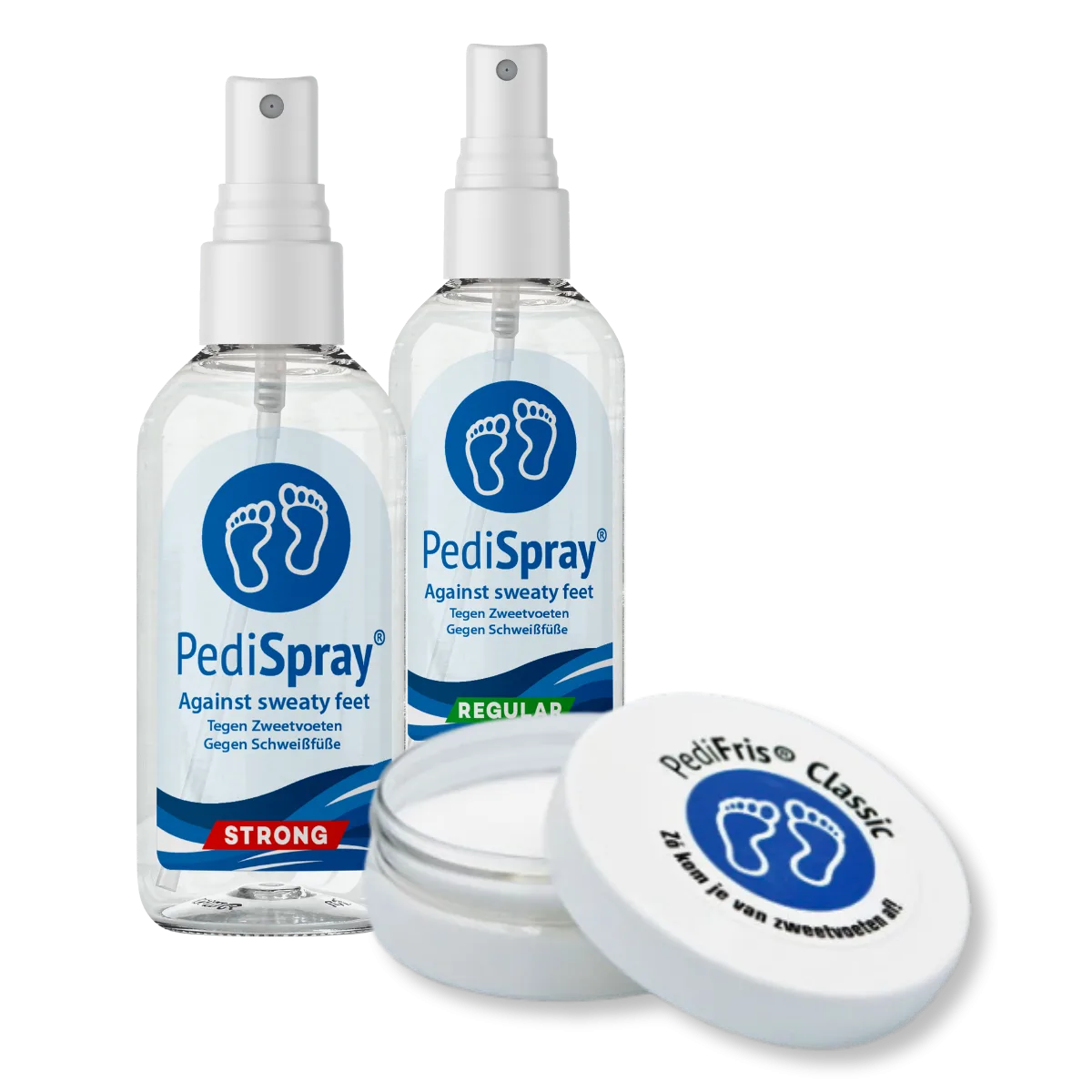
The ready-to-use alternative to the aluminium chloride solution.
PediSpray® contains the same active aluminium salts as the pharmacy solution, but is fragrance-free, ready to use, and formulated in a skin-friendly concentration: Regular with 15% and Strong with 20% aluminium chloride. No prescription, no faffing about with swabs — just spray, let it dry, and stop the sweating.
Frequently asked questions about aluminum chloride for sweaty feet
Short answers about how it works, the concentration, skin use and pitted keratolysis.
What is the difference between PediSpray Regular and Strong?
PediSpray Regular contains 15% aluminum chloride. PediSpray Strong contains 20% aluminum chloride. The difference is the strength and how your skin responds to it.
Does aluminum chloride help with sweaty feet?
Aluminum chloride is widely used in antiperspirant products that aim to reduce sweat on the skin. For many people, that means less dampness and less fast odour build-up.
When should you choose 15% and when 20%?
15% is often the logical place to start if you want to build up gently or if your skin is more sensitive. 20% is more suitable if you need stronger support and know your skin handles it well.
Can you use aluminum chloride on damaged skin?
No. Do not use it on open cuts, broken skin or clearly irritated areas. Let the skin recover first or ask for advice if you are unsure.
Is this the same as a deodorant?
No. A deodorant mainly focuses on odour, while an antiperspirant aims to reduce sweat on the skin itself. That difference matters if wet feet are your main issue.
Can aluminum chloride help with pitted keratolysis?
Reducing moisture can be helpful, because drier skin gives bacteria less opportunity to grow. Even so, pitted keratolysis usually needs more than one step.
About the author & sources
Written by Judith de Jong (Content owner, PediFris®) and medically reviewed by Sébastian Deqidt, podiatrist. We base our advice on foot care practice and on the medical sources listed below.
Worried about a persistent complaint, fungal nail, athlete’s foot or excessive sweating? Consult your GP, podiatrist or chiropodist.
Sources
- NHS: Excessive sweating (hyperhidrosis) — www.nhs.uk
