

What to do about sweaty feet? Causes and solutions

What can be done about sweaty feet? Start with the cause: excess moisture on the skin and a damp environment inside your shoes. On this page, you can read about what sweaty feet are, what you can do yourself, and how our two-step approach works.
In short
- Reduced sweating on the skin: PediSpray® antiperspirant.
- Footwear hygiene: PediFris® Classic shoe powder.
By
Judith de Jong, Content owner, PediFris®
Medically reviewed by Sébastian Deqidt, podiatrist
· Updated on 3 July 2026


What to do about sweaty feet
Tackling sweaty feet
Sweaty feet are caused by excessive sweating and the bacteria that thrive on damp skin and inside your shoes. What can you do? Tackle it from two angles: reduce sweating on the skin and keep your shoes dry and fresh.

Step 1
Reduce sweating on the skin
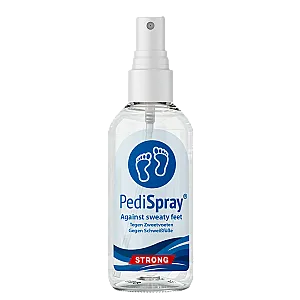
Use an antiperspirant foot spray. PediSpray® (Strong or Regular) soothes overactive sweat glands and keeps your feet dry. Apply in the evening to clean, dry feet, and then gradually reduce usage for maintenance.
Step 2
Keep your shoes dry and fresh
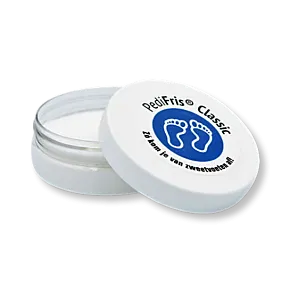
Sprinkle PediFris® Classic powder into your shoes. It targets bacteria and fungi in the shoe lining and keeps the inside of the shoe dry, so odours don’t stand a chance.
Step 3
Perseverance and prevention
Use the spray and powder daily. This will keep your feet and shoes dry and prevent sweaty feet and odour from returning.
.svg)
 Linda Heeren
★
★
★
★
★
03 Jul. 2026
"The only product that really works. "
Translated
Rolf
★
★
★
★
★
03 Jul. 2026
"Can’t say much about it yet… I’ve only had it for a week. Initial indications are that it’s effectiv..."
Translated
 Dirk Wendland
★
★
★
★
★
01 Jul. 2026
"Everything’s great – would definitely buy again – very good and effective products – fast delivery"
Translated
Richard F
★
★
★
★
★
22 Jun. 2026
"Despite my initial scepticism, I must admit that my feet no longer sweat. I wonder if it will stay t..."
Translated
Anna Schenk
★
★
★
★
★
12 Jun. 2026
"Haven’t received the order yet. After contacting customer services, the order was reshipped and has..."
Translated
T.J.
★
★
★
★
★
08 Jun. 2026
"Good and fast delivery, good product."
Translated
Dieter Röhrich
★
★
★
★
★
08 Jun. 2026
"Super-fast delivery 💯👍"
Translated
Patrick
★
★
★
★
☆
08 Jun. 2026
"So far, there"
Translated
Neri Peters
★
★
★
★
★
05 Jun. 2026
"Received excellent service; a great product – highly recommended."
Translated
NW
★
★
★
☆
☆
02 Jun. 2026
"For me, as someone who suffers from excessive sweating of the hands and feet, it unfortunately doesn..."
Translated
What exactly are sweaty feet?
The soles of your feet are full of sweat glands — hundreds of thousands per foot, the highest density in your entire body. A little sweat is normal and cools your feet down, but with sweaty feet, the glands consistently produce more moisture than is necessary. Fresh sweat is, in itself, virtually odourless the characteristic odour only develops when bacteria on the skin and in your shoes break down that moisture.
That is why the problem tends to worsen in warm, damp shoes with poor ventilation: this is where bacteria find the ideal breeding ground. Factors such as synthetic footwear, wearing the same shoes day in, day out, stress, hormonal fluctuations (puberty, pregnancy), and being overweight make sweating worse. Do your feet sweat?constant, regardless of the weather this may indicate excessive sweating (hyperhidrosis).
What can be done about sweaty feet? Start with the basics.
You can tackle a large part of the discomfort by adopting good habits. Think of this as the foundation for any further treatment:
- Wash and dry your feet every day., including between the toes. Remove calluses regularly — bacteria like to hide there.
- Choose socks made from natural materials.(cotton, merino wool or bamboo), change them every day and wash them at 60°C. Do not use fabric softener; it seals the fibres.
- Wear breathable shoes. Preferably made of leather, and change pairs daily. Allow worn shoes to dry for at least 24 hours and remove the insoles.
- Let your feet breathe. by walking barefoot or in open-toed slippers at home.
Is the sweating persisting? Tackle it at the source.
Hygiene helps, but with persistent sweaty feet, washing alone won’t solve the problem. You need to tackle the problem at the two points where it originates: on the skin and in the shoe.
First, reduce the sweating itself with a anti-perspirant foot spray(PediSpray® Regular or Strong). Unlike a standard deodorant, which merely masks odour, an antiperspirant soothes overactive sweat glands, keeping your feet drier. You can also keep your shoes fresh with a antibacterial shoe powder(PediFris® Classic): it keeps the inside of the shoe dry and tackles the bacteria and fungi in the lining, so odours don’t stand a chance.
It is precisely this combination — less sweat on the skin and a dry, clean shoe — that delivers longer-lasting results than individual measures. Home remedies such as vinegar or bicarbonate of soda baths provide only temporary relief at best and can dry out or irritate the skin; they do not inhibit sweating itself — an antiperspirant does.
When should you see your GP or chiropodist?
Seek medical advice if the symptoms persist despite proper care, if your feet are constantly soaking wet (a sign of hyperhidrosis), or if you notice skin abnormalities such as cracks, white, softened skin, athlete's foot, or a fungal nail infection.
If you suffer from excessive sweating, your GP may prescribe a stronger aluminium chloride solution or discuss treatments such as iontophoresis or injection therapy. A medical pedicurist can help with calluses, fungal infections, and keeping your feet healthy and strong.
Ready to get started? Choose a spray for sweaty feet(PediSpray® Regular or Strong) for your feet and a remedy for sweaty feet(PediFris® Classic) for your shoes.
See also: Athlete's foot, Fungal nail infection, Pitted keratolysis, Excessive sweating.
How to treat sweaty feet yourself
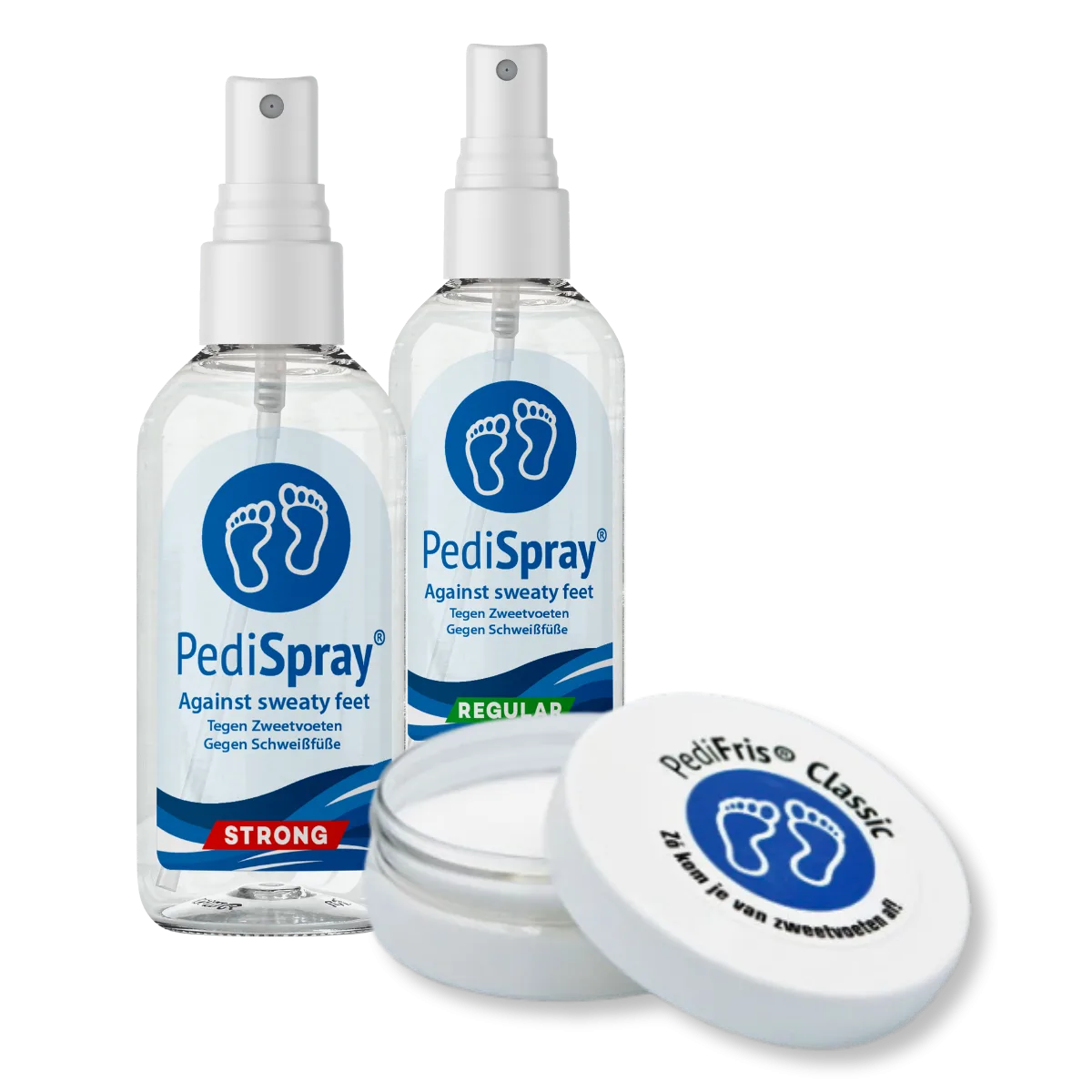
Combine the PediSpray® foot spray (reduces sweat on the skin) with the antibacterial PediFris® Classic powder (for fresh, dry shoes). Together, they tackle both the causes of sweaty feet and the odour.
Frequently asked questions about sweaty feet.
Answers about causes, what helps, pitted keratolysis, home remedies, odours in shoes, and when to seek medical advice.
What are sweaty feet and how do they develop?
Sweaty feet means that the soles of your feet (and sometimes the instep) produce more sweat than is necessary for cooling. There are a great many sweat glands on the soles of the feet; the figure often cited is 250,000+ glands per foot.
Common factors: heredity, stress, heat, sport, tight or non-breathable shoes, and synthetic socks. Fresh sweat itself has hardly any smell; an unpleasant odour mainly develops when moisture remains in socks and shoes for a long time and bacteria and fungi break down the sweat. You can read more about smelly feet, foot odour, and smelly shoes on our separate pages.
What helps with sweaty feet?
The best approach is to combine two steps: less sweat on the skin and fewer bacteria in your shoes.
- On the skin: PediSpray® antiperspirant.
- In your shoes: PediFris® Classic.
Complement this with thorough drying, breathable socks, and allowing your shoes to air for 24 hours.
What complications are associated with chronically wet feet (such as toenail fungus and athlete's foot)?
If your feet and shoes remain damp and warm for long periods, this creates a more favourable environment for fungi and bacteria:
- Athlete’s foot (tinea pedis): itching, flaking, sometimes cracks between the toes, often made worse by moisture.
- Toenail fungus: thickened, yellowed or brittle nails; may occur alongside athlete’s foot due to the same damp environment.
Manage sweating and maintain good hygiene (less moisture on the skin + clean, dry shoes) to prevent these problems or to support treatment alongside any antifungal medication.
What are pitted soles and what do they have to do with smelly feet?
Pitted keratolysis (pitted keratolysis / keratoma sulcatum) are small pits in the skin of the sole of the foot, often near the heel or ball of the foot, sometimes accompanied by a sour or pungent odour. It is caused by bacteria that break down the skin in damp conditions.
Prolonged sweating and shoes that do not dry out are among the risk factors. Treatment: keep feet dry, allow shoes to air, limit the use of synthetic materials and, as with sweaty feet, regulate perspiration on the skin and maintain good footwear hygiene.
What is the difference between foot deodorant and antiperspirant?
A foot deodorant mainly masks odour with perfume; the amount of sweat and moisture in your shoes remains largely the same.
An antiperspirant (including for the feet) is designed to temporarily reduce sweat production, thereby keeping the surface less clammy. For people with damp feet, this approach to skin care is often the most important step alongside good hygiene and dry shoes.
Do bicarbonate of soda, vinegar, or other home remedies help with sweaty feet?
Bicarbonate of soda or vinegar is sometimes used to mask odours or degrease surfaces; this may provide short-term relief. They do not structurally inhibit sweat production by your sweat glands and are no substitute for a regular routine involving suitable foot care products and shoe hygiene.
For noticeable improvement that lasts all day, using an antiperspirant on the feet combined with good footwear hygiene is generally more reliable than home remedies alone.
Why do my shoes smell of ammonia or “cat wee”?
Certain strains of bacteria in a damp, poorly ventilated shoe can break down sweat into substances that smell of ammonia, often described as a “cat’s urine smell.” This odour can permeate the lining.
Reducing moisture (less sweat on the skin + allowing shoes to dry thoroughly) and using products designed to tackle bacteria in footwear (such as PediFris® Classic) help to combat this type of odour. See also tips for dealing with smelly shoes.
Are sweaty feet contagious?
Excessive sweating in itself is not a contagious condition: it is a function of your sweat glands and factors such as heat and stress.
Please note: a permanently damp environment inside the shoe increases the risk of fungal infections (such as athlete’s foot), and these can indeed be contagious via wet floors or shared changing rooms. Proper drying and hygiene reduce this risk.
When should I see my GP about sweaty feet?
Please visit us if you experience pain, open wounds, signs of infection, or if you have diabetes and are concerned about your feet. Also, if you suffer from excessive sweating (hyperhidrosis) that affects your daily life: in such cases, other treatments can be discussed.
For general information on sweating, please also refer to Thuisarts.nl, ‘sweaty feet’.
Read also:
Foot spray for sweaty feet (PediSpray®)
Remedy for sweaty feet (PediFris® Classic)
Excessive sweating (hyperhidrosis): causes and solutions
Treat smelly shoes (main page)
Shoe size calculator
Treat pitted soles
Voetdeodorant tegen zweetvoeten
Beste sokken tegen zweetvoeten
Zweetvoeten in werkschoenen
Stinkvoeten aanpakken
About the author & sources
Written by Judith de Jong (Content owner, PediFris®) and medically reviewed by Sébastian Deqidt, podiatrist. We base our advice on foot care practice and on the medical sources listed below.
Worried about a persistent complaint, fungal nail, athlete’s foot or excessive sweating? Consult your GP, podiatrist or chiropodist.
Sources
- NHS: Excessive sweating (hyperhidrosis) — www.nhs.uk
- NHS: Smelly feet — www.nhs.uk
