

Pitted keratolysis: treatment and prevention

What can you do about pitted soles? First, tackle bacteria in your shoes with daily shoe powder, and then reduce excessive moisture on your feet with an antiperspirant. This way, you tackle the cause of odour and pitted soles at the same time.
Simply washing or masking the odour is usually not enough. With a regular routine, you’ll achieve drier feet more quickly and experience fewer recurring problems.
In short
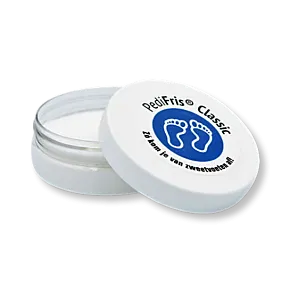
- Step 1 inside the shoe: daily hygiene with PediFris® Classic.
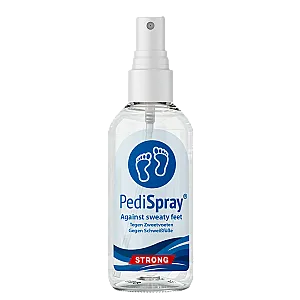
- Step 2 on the skin: reduce sweating with PediSpray®.
- Routine: dry thoroughly between the toes, change your socks, and let your shoes air out.
By
Judith de Jong, Content owner, PediFris®
Medically reviewed by Sébastian Deqidt, podiatrist
· Updated on 24 June 2026


How the treatment works
Why the spray and powder work for pitted keratolysis
Pitted keratolysis thrives on damp, warm skin. Tackle the bacteria from two angles — on the skin and inside the shoes.
Step 1
Antibacterial skin treatment
PediSpray® (Strong or Regular) on the feet combats odour-causing bacteria directly on the skin and regulates perspiration.
Step 2
Disinfecting shoes
PediFris® Classic powder in shoes has an antibacterial effect and keeps the inside of the shoes dry, thus eliminating the breeding ground for bacteria.
Step 3
Keep dry & prevention
Use the spray and powder daily: this keeps feet and shoes dry and prevents the condition from returning.
.svg)
 Linda Heeren
★
★
★
★
★
03 Jul. 2026
"The only product that really works. "
Translated
Rolf
★
★
★
★
★
03 Jul. 2026
"Can’t say much about it yet… I’ve only had it for a week. Initial indications are that it’s effectiv..."
Translated
 Dirk Wendland
★
★
★
★
★
01 Jul. 2026
"Everything’s great – would definitely buy again – very good and effective products – fast delivery"
Translated
Richard F
★
★
★
★
★
22 Jun. 2026
"Despite my initial scepticism, I must admit that my feet no longer sweat. I wonder if it will stay t..."
Translated
Anna Schenk
★
★
★
★
★
12 Jun. 2026
"Haven’t received the order yet. After contacting customer services, the order was reshipped and has..."
Translated
T.J.
★
★
★
★
★
08 Jun. 2026
"Good and fast delivery, good product."
Translated
Dieter Röhrich
★
★
★
★
★
08 Jun. 2026
"Super-fast delivery 💯👍"
Translated
Patrick
★
★
★
★
☆
08 Jun. 2026
"So far, there"
Translated
Neri Peters
★
★
★
★
★
05 Jun. 2026
"Received excellent service; a great product – highly recommended."
Translated
NW
★
★
★
☆
☆
02 Jun. 2026
"For me, as someone who suffers from excessive sweating of the hands and feet, it unfortunately doesn..."
Translated
What can be done about pitted keratolysis?
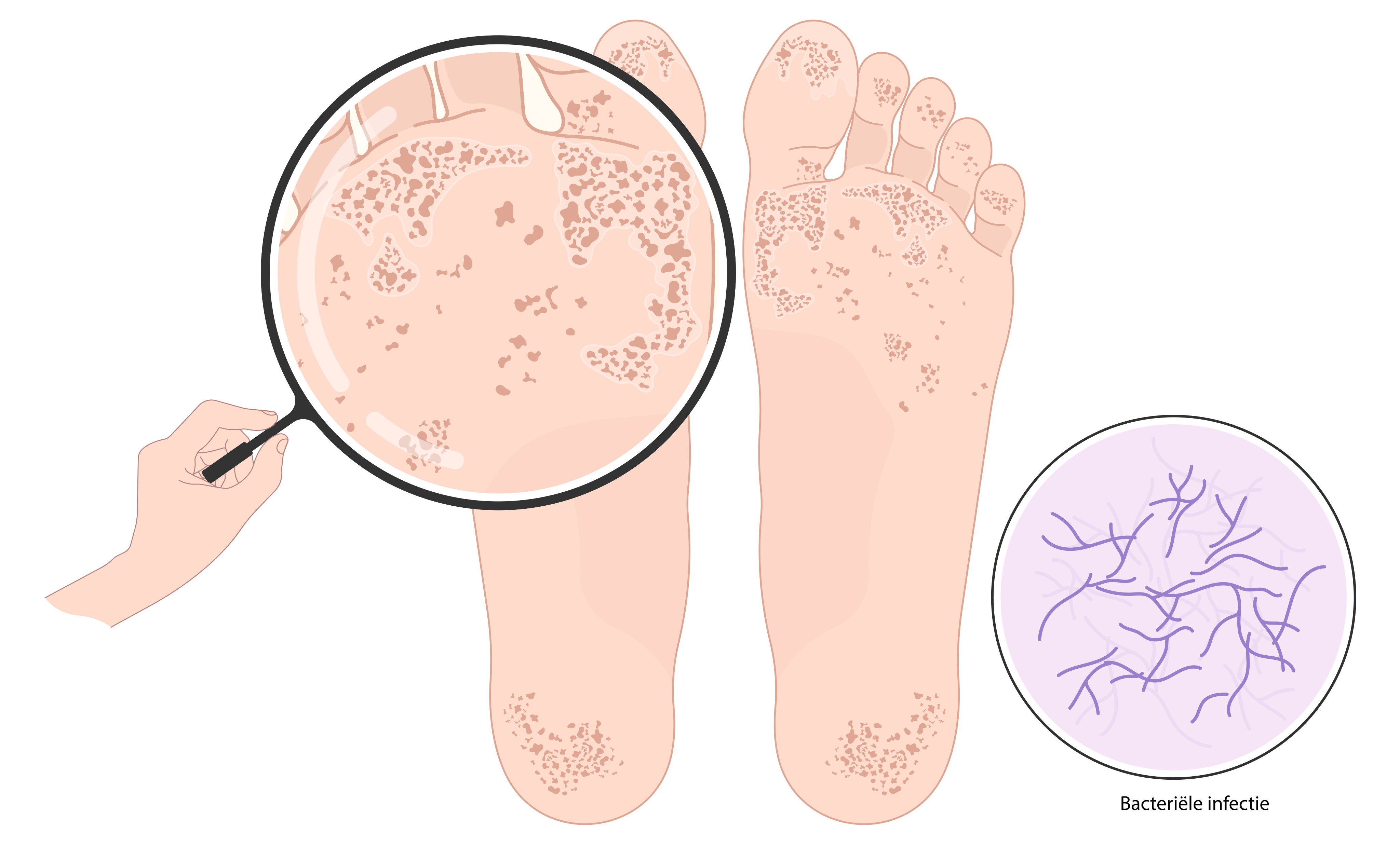
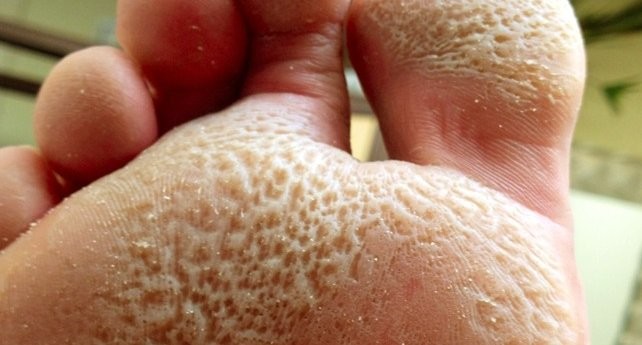
Do you suffer from an extremely strong odour of sweat, small craters or pits on the soles of your feet, and soft, white-coloured skin? There’s a good chance you’re dealing with pitted keratolysis (medical term:pitted keratolysis). This harmless but annoying bacterial skin infection is very common, particularly among people with sweaty feet. Fortunately, it can be treated very effectively and relatively quickly.
Many people are alarmed when they discover the tiny holes in their calluses, combined with a very pungent odour of sweat. The cause, however, is simple: certain bacteria (such as Corynebacteria) thrive particularly well on warm, sweaty feet.
Causes, Symptoms and Consequences of Pitted Keratolysis
These bacteria produce enzymes that break down the keratin protein in your calloused skin. The result?
The characteristic pits and the unpleasant odour. As long as your feet remain damp and the bacteria in your shoes survive, the condition will not go away on its own.
The Solution: PediFris® stops bacteria and sweat.
Do you want to get rid of pitted keratolysis quickly and prevent it from coming back? Then a foot bath or a standard deodorant won’t be enough.
You need to break the vicious circle with a targeted two-step approach: eliminate the bacteria in your shoes with PediFris® Classic shoe powder, and remove their breeding ground (moisture) by keeping your feet bone dry with PediSpray® foot spray. We’ll tell you exactly how.
Stop bacterial growth in your shoes.
Tackle the cause of pitted keratolysis at the source.
Old bacteria in your shoes cause repeated infections. Break this cycle immediately with our effective powder formula.
PediFris® Classic Shoe Powder: Banish bacteria from your shoes.
When treating pitted keratolysis, the focus is often solely on washing and applying ointment to the feet. That is a major pitfall! The bacteria that eat away at the calluses and cause the extreme ammonia-like stench survive effortlessly in the lining of your shoes.
As long as you do not disinfect your shoes, you will keep reinfecting yourself every time you put them on.
With PediFris® Classic With this shoe powder, you can put an end to these stubborn bacteria once and for all. This powerful loose powder does not simply mask the unpleasant odour with a layer of perfume but actively kills the disease-causing bacteria.
How do you do this? Simply sprinkle half a teaspoon of powder into your shoes before putting them on. The powder penetrates deep into the material, cleans your shoes from the inside out, and stops the callus layer from wearing away.
Remove the bacteria's breeding ground
No sweat means no pitted keratolysis.
Now that your shoes are bacteria-free, it is crucial to keep your feet completely dry so that new bacteria don’t stand a chance.
PediSpray® Foot Spray: Dry Feet, Rapid Recovery
Your shoes are now clean, but to cure and banish pitted keratolysis for good, we need to prevent the bacteria from returning. We do this by depriving them of their favourite habitat: moisture and sweat! Bacteria need damp, sweaty feet to survive and multiply.
Whereas a standard deodorant merely masks the odour temporarily, PediSpray® A clinically proven antiperspirant. The high-quality aluminium salts in the spray safely calm overactive sweat glands. This immediately stops excessive sweating, allowing the damaged calloused layer (the pits) to finally heal undisturbed. Without sweat, bacteria have nothing to live on, and without bacteria… no odour and no pitted keratolysis!
Application: Spray PediSpray® in the evening before going to bed onto clean, dry feet. Pay particular attention to the soles of the feet and the areas where the dimples are visible. Use 4 to 6 pumps and allow the skin to air dry completely.
Action: After a single application, your feet are guaranteed to stay dry for up to 5 days. Use it daily for the first week and then simply reduce this to 1 or 2 times a week for maintenance.
Finally, you can take your shoes off without a care again.
No more embarrassment – fresh, radiant feet anywhere, anytime.
The Result: Restored Feet, Odour-Free Shoes and No More Pitted Keratolysis
Pitted soles can be extremely stubborn if you only tackle half the problem. If you treat only your feet or only your shoes, you’ll be fighting a losing battle.
By using the golden combination of PediFris® Classic (to kill the bacteria in your shoes) and PediSpray® (to stop your feet from sweating), you can break this vicious cycle once and for all. Your feet will have the chance to recover fully, the cracks in your calluses will disappear, the extreme odour will vanish, and you’ll enjoy healthy, dry feet and shoes every single day.
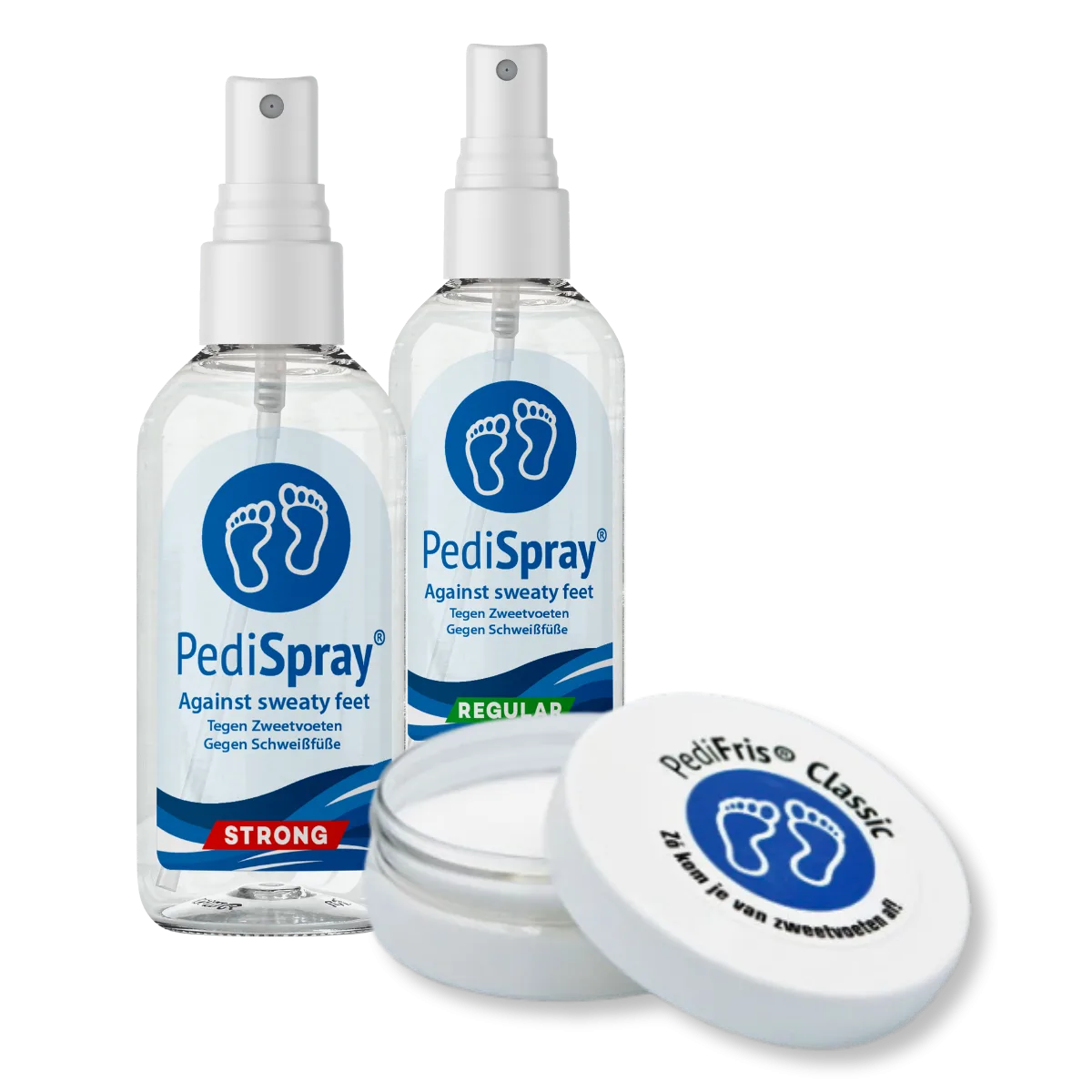
Targeting pitted keratolysis?
Treat the skin with PediSpray® and disinfect your shoes with the antibacterial PediFris® Classic powder — tackle the bacterial cause from both sides.
Frequently asked questions about pitted keratolysis
Brief answers regarding causes, contagiousness, treatment, prevention, and safety.
What can be done about pitted keratolysis?
Combine footwear hygiene with reducing foot perspiration, so that you tackle both bacteria and moisture.
- Apply powder to footwear daily.
- Apply antiperspirant to clean, dry feet.
- Allow socks and shoes to dry thoroughly.
Are pitted keratolysis contagious?
Pitted soles themselves are not classically contagious like some fungal infections, but bacteria do thrive in damp environments.
Good personal hygiene and keeping shoes dry remain important.
How soon will you notice an improvement?
Many people notice a reduction in odour within days, but stable recovery requires a consistent daily routine.
Continue until your shoes and skin are noticeably calmer.
Do home remedies help with pitted keratolysis?
Home remedies may provide temporary relief, but often do not fully address the cause.
A consistent approach involving footwear hygiene and reducing moisture on the skin is usually more effective.
How can you prevent pitted keratolysis from returning?
Prevention focuses on keeping feet dry and ensuring a clean environment inside shoes.
- Dry thoroughly between the toes every day.
- Change your socks frequently.
- Air out your shoes and alternate between pairs.
When should you see your GP?
If you experience pain, cuts, clear signs of infection, or have diabetes, do not hesitate to see your GP.
Medical advice is also advisable if symptoms persist despite following the routine.
About the author & sources
Written by Judith de Jong (Content owner, PediFris®) and medically reviewed by Sébastian Deqidt, podiatrist. We base our advice on foot care practice and on the medical sources listed below.
Worried about a persistent complaint, fungal nail, athlete’s foot or excessive sweating? Consult your GP, podiatrist or chiropodist.
Sources
- DermNet: Pitted keratolysis — dermnetnz.org
