

Smelly shoes and shoe odour: tackle the cause for lasting freshness.

What can be done about smelly feet?
You know the feeling: after a long day at work or a vigorous workout, you take off your shoes, and immediately the whole room is filled with a pungent, sour smell of sweat. Smelly shoes are a huge source of annoyance and embarrassment. Many people think their favourite shoes are simply ‘worn out’ and, in frustration, throw them in the bin. What a shame, because with the right approach, you can easily get rid of that stench!
What can you do about smelly shoes? (The quick answer)
Smelly shoes are not caused by sweat itself, but by bacteria and fungi that thrive in the damp material of the shoe. To remove that stubborn odour for good, follow this effective three-step plan:
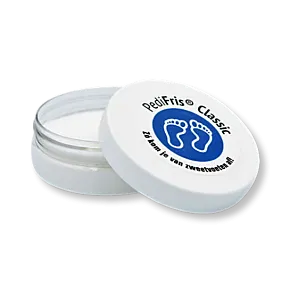
Kill the bacteria in the lining: Before wearing, sprinkle an antibacterial shoe powder (such as PediFris® Classic) in your shoes. This kills the bacteria and neutralises the odour at the source, rather than merely masking it.
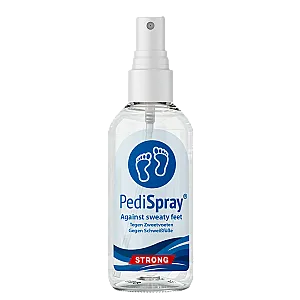
Stop new moisture (sweat): Use an antiperspirant foot spray before going to bed (such as PediSpray®) to stop your feet from sweating. Without new sweat, the bacteria's environment dries out.
ℹ️ Alternate your shoes: It is best not to wear the same pair of shoes two days in a row. Always allow your shoes at least 24 hours to dry completely in the open air (and out of your sports bag!).
By
Judith de Jong, Content owner, PediFris®
Medically reviewed by Sébastian Deqidt, podiatrist
· Updated on 24 June 2026


What to do about smelly shoes
Tackling shoe odour at the source
Shoes start to smell because bacteria and fungi break down sweat in the warm, damp lining. Masking the odour with fragrances doesn’t help — tackle both the bacteria and the moisture.

Step 1
Kill the odour-causing bacteria in the shoe
Sprinkle PediFris® Classic powder into your shoes. It has an antibacterial effect and neutralises odours at the source, rather than simply masking them.
Step 2
Stop the sweat that fuels the odour
Use PediSpray® (Strong or Regular) on your feet. The antiperspirant inhibits sweating, so that the bacteria no longer have any moisture to survive.
Step 3
Allow shoes to dry and alternate between pairs
Allow your shoes at least 24 hours to dry and change pairs daily. Remove the insoles so that everything can air out properly.
.svg)
 Linda Heeren
★
★
★
★
★
03 Jul. 2026
"The only product that really works. "
Translated
Rolf
★
★
★
★
★
03 Jul. 2026
"Can’t say much about it yet… I’ve only had it for a week. Initial indications are that it’s effectiv..."
Translated
 Dirk Wendland
★
★
★
★
★
01 Jul. 2026
"Everything’s great – would definitely buy again – very good and effective products – fast delivery"
Translated
Richard F
★
★
★
★
★
22 Jun. 2026
"Despite my initial scepticism, I must admit that my feet no longer sweat. I wonder if it will stay t..."
Translated
Anna Schenk
★
★
★
★
★
12 Jun. 2026
"Haven’t received the order yet. After contacting customer services, the order was reshipped and has..."
Translated
T.J.
★
★
★
★
★
08 Jun. 2026
"Good and fast delivery, good product."
Translated
Dieter Röhrich
★
★
★
★
★
08 Jun. 2026
"Super-fast delivery 💯👍"
Translated
Patrick
★
★
★
★
☆
08 Jun. 2026
"So far, there"
Translated
Neri Peters
★
★
★
★
★
05 Jun. 2026
"Received excellent service; a great product – highly recommended."
Translated
NW
★
★
★
☆
☆
02 Jun. 2026
"For me, as someone who suffers from excessive sweating of the hands and feet, it unfortunately doesn..."
Translated
Why do shoes start to smell?
It is not the sweat itself that smells — fresh sweat is virtually odourless. The odour is caused by bacteria and fungi Sweat breaks down in the warm, damp lining of your shoe. Your feet have hundreds of thousands of sweat glands and can collectively release up to half a litre of fluid per day; in a poorly ventilated shoe, this creates an ideal breeding ground.
Synthetic materials, wearing the same shoes day in, day out, and going barefoot in closed shoes make the condition worse. If a shoe has a pungent or ammonia-like smell (the familiar “cat urine smell”), the waste products from the bacteria penetrate deep into the lining — which is why simply airing the shoes is often not enough.
What can be done about smelly shoes?
Coffee pods, bicarbonate of soda, vinegar, or leaving them in the freezer overnight are often suggested, but these mask or dampen the odour, at most temporarily— the bacteria and the sweat that feed them remain. For a lasting fresh result, tackle the two areas where the odour originates: inside the shoe and on the skin.
Sprinkle a antibacterial shoe powder(PediFris® Classic) in your shoes: it kills the odour-causing bacteria in the lining and keeps the inside of the shoe dry, rather than simply masking the odour. You can also reduce sweating itself with a anti-perspirant foot spray(PediSpray®), so that the bacteria no longer have any moisture to survive on. Suffering from sweaty feet In that case, the second step is particularly important.
How to prevent shoe odour: shoes, socks, and routine
Keep your shoes dry and the bacteria won’t stand a chance:
- Change your shoes every day. and allow each pair at least 24 hours to dry — not in your sports bag, but in a well-ventilated area.
- Remove the insoles. After wearing, ensure that both the shoe and the insole can air out; replace worn or saturated insoles in good time.
- Choose breathable shoes.(leather breathes better than synthetic materials) and socks made of cotton, wool, or bamboo; change them daily.
- Wash and dry your feet thoroughly. including between the toes, and walk around the house barefoot or in slippers so that your feet can breathe.
Sports and work shoes: extra sweat, extra care
In sports and work shoes, you sweat profusely, and the moisture lingers for a long time. Washing seems to be the solution, but that often damages the shoe. and does not remove the bacteria from the lining. It is better to treat them: use powder in the shoes, antiperspirant on the feet, and, if possible, two pairs that you alternate between. You can read more about this on our page about smelly trainers.
When is it athlete's foot — or are your shoes simply “worn out”?
If the odour keeps returning and you also notice itching, flaking, or cracks between the toes, then there may be athlete's foot are at play; this requires a targeted (anti-fungal) approach alongside good hygiene. If the lining is structurally damaged and no treatment helps anymore, then the shoes are genuinely worn out. But don’t throw them away too quickly: with powder and a dry routine, most ‘lost’ shoes can be saved just fine.
Ready to get started? Sprinkle a remedy for shoe odour(PediFris® Classic) in your shoes and tackle sweat with a spray for sweaty feet(PediSpray®).
Get rid of odours in your shoes
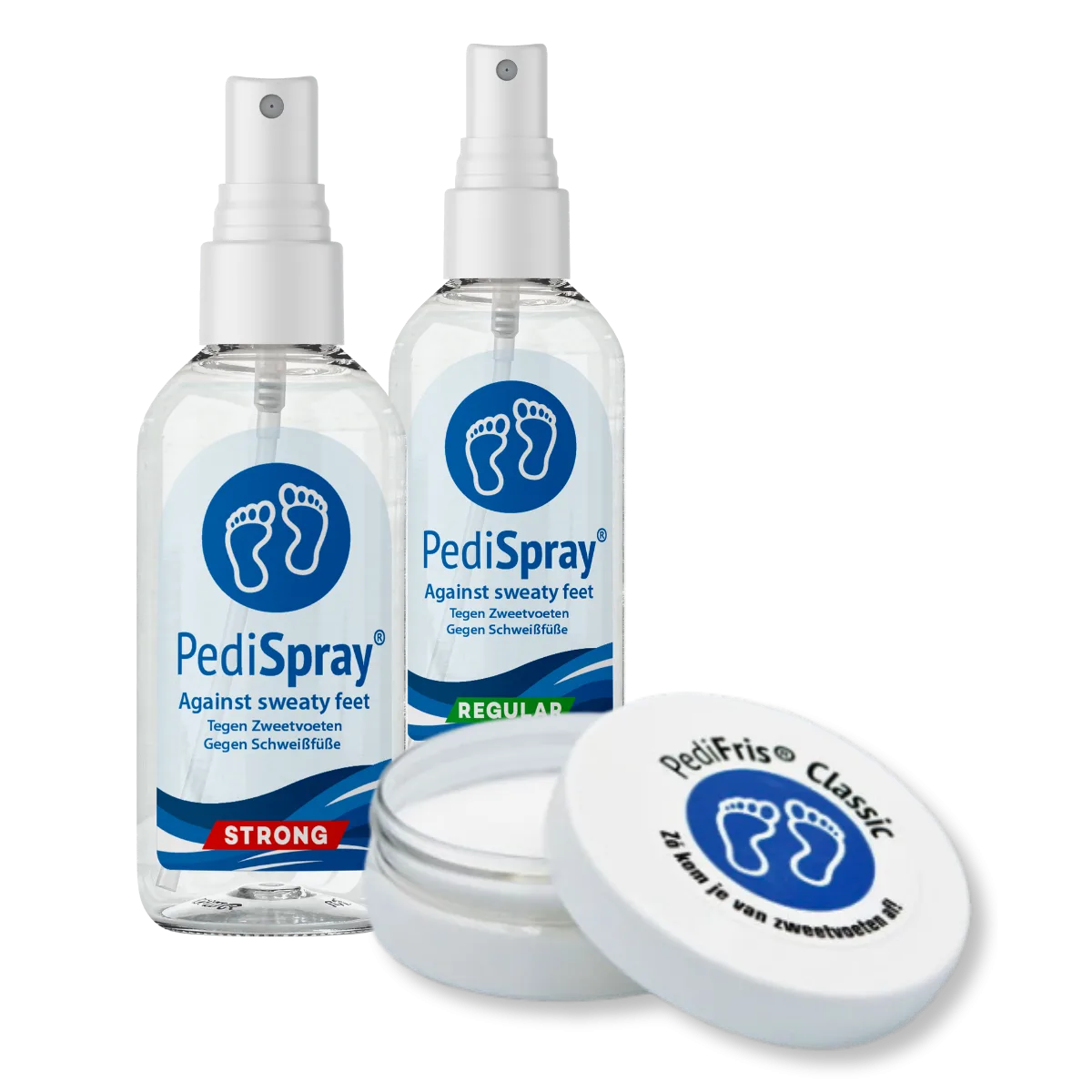
Combine the antibacterial PediFris® Classic powder (kills odour-causing bacteria in the lining) with the PediSpray® foot spray (stops sweating). Together, they tackle shoe odour at its source — not just the odour, but also the cause.
Frequently asked questions about smelly shoes and shoe odour.
Below you will find a detailed answer to questions about smelly shoes, shoe odour, and what you can do yourself. The information covers hygiene, reducing moisture, and products that tackle the cause in the foot and shoe.
Why do shoes smell, and how does shoe odour develop?
Smelly shoes are usually caused by sweat, heat and poor ventilation creating a favourable environment for bacteria and fungi. These break down skin flakes and sweat into volatile compounds: this is what we smell as shoe odour.
Sweat itself has hardly any smell; the odour is mainly caused by micro-organisms in damp shoes and on insole pads. Synthetic linings, closed shoes and wearing the same pair every day trap moisture for longer, allowing the odour to penetrate deeper into the material.
A pungent or ammonia-like odour can be associated with certain breakdown products of sweat. That is why an approach that combines managing moisture on the feet with maintaining hygiene inside the footwear is effective, for example, using PediSpray® and PediFris® Classic.
What helps with smelly shoes: steps and products
Effective solutions for smelly shoes focus on three areas: reducing excessive sweating on the skin, minimising the breeding ground for bacteria inside the shoe, and ensuring the shoes are properly dried and aired between wears.
PediSpray® (anti-perspirant for the feet) reduces sweating on the skin; less moisture means less food for odour-causing bacteria. PediFris® Classic targets the footwear and the conditions in which bacteria and fungi thrive. See ‘spray for sweaty feet’ and ‘remedy for sweaty feet and odour in shoes’ for an explanation of each product.
You can find the products in the shop: PediSpray® Strong, PediSpray® Regular, and PediFris® Classic.
How do you prevent shoe odour? Tips for shoes, socks, and your daily routine
The best way to prevent shoe odour is to establish regular habits:
- Change your shoes: don’t wear the same pair every day; give your shoes time to dry.
- Socks: clean, preferably cotton or woollen socks that absorb moisture; change them daily.
- Ventilation: let shoes air out at room temperature; do not leave them in a sealed bag for days on end.
- Wash and dry your feet, including between the toes, before putting on your shoes.
- Shoe care: use PediFris® Classic as directed to minimise sources of odour.
This way, you can combine prevention with a targeted approach if your shoes are already smelly.
Smelly trainers or work boots: what to look out for?
With sports shoes and heavy-duty work boots, there is often more sweat and mechanical stress. This requires extra attention to allowing them to dry, changing pairs, and ensuring PediSpray® is applied to the feet and PediFris® Classic is applied to the footwear after intensive use.
The aim remains the same: to minimise moisture, prevent micro-organisms from taking hold, and avoid putting shoes back in the cupboard while they are still damp.
Shoes that smell of cat urine: causes and what to do about them
When people say that shoes smell of cat urine, they usually mean a very pungent, ammonia-like odour coming from the footwear. This cat urine smell is not caused by urine in the shoe, but by the breakdown of sweat and skin flakes by bacteria in a warm, damp environment. The longer moisture and heat remain inside the shoe, the stronger the odour can become.
What helps with smelly shoes that have this typical odour: reducing moisture on the feet (for example, with PediSpray® to combat excessive sweating) and tackling the source inside the shoes with PediFris® Classic shoe powder. Combine this with allowing your shoes to air properly, alternating between pairs, and wearing clean socks.
If the odour remains extremely strong, or if you have skin problems, seek advice from a skin therapist or GP. This article is not a substitute for a medical examination.
About the author & sources
Written by Judith de Jong (Content owner, PediFris®) and medically reviewed by Sébastian Deqidt, podiatrist. We base our advice on foot care practice and on the medical sources listed below.
Worried about a persistent complaint, fungal nail, athlete’s foot or excessive sweating? Consult your GP, podiatrist or chiropodist.
Sources
- NHS: Smelly feet — www.nhs.uk
